
Collaboration
Excerpt from Backchannel — July 2016
In 2014, the White House formed the United States Digital Service. The USDS intends to replicate, assembly-line-style, the sprint that saved healthcare.gov. Using talent recruited on the basis of patriotism and the promise of impactful work, USDS tries to target similar moribund projects, or problems that could be addressed by modern tech practices, and produce stuff that works, at a fraction of the traditional cost.
To do that, the USDS needs to fan out from the White House and embed its Silicon Valley hacker recruits into the major government agencies, to get direct access to a select set of projects that would make a difference in citizens’ lives.
And it is doing just that. The USDS has worked on thirteen major projects involving eleven agencies, and claims to have saved the government many times its $14 million budget. It has charters to place full-blown teams in seven different agencies, with more to come before the end of the year. When the U.S. Government Accountability Office (GAO) quizzed managers at the agencies on whether they were satisfied with the effort, the average score was 4.67 on a scale of 5…
18F is an office inside the General Services Administration that helps other federal agencies build, buy, and share efficient and easy-to-use digital services. We’re a team of technology experts that work with agencies to diagnose problems and then work alongside agency teams to find the right solutions.
Headquartered at 18 and F streets in Washington, D.C., we’re an office of federal employees acting as a civic consultancy for the government. We’re transforming government from the inside out, creating cultural change by working with teams inside agencies who want to create great services for the public…
18F employees live all over the country. We work out of homes in Dayton and Tucson, St. Louis and Chapel Hill — and in federal buildings in San Francisco, Chicago, New York City, and Washington, D.C.
That means many of our project teams are also made up of distributed employees working all over the country. For example, you may have a developer in Austin, a designer in Washington, D.C., and a content strategist in Portland — but they’re all working on the same team and with the same partners.
Because we work on distributed teams so frequently, we’ve developed certain strategies for working well as a collaborative operation….
- We have a “remote first” mindset.
- We have a five-hour overlap in our workdays.
- We share our screens frequently.
- We have face-to-face meetings at least once a week.
- We make our work transparent to each other.
- We over-communicate, especially with clients.
- For this to work well, we all think of ourselves as remote employees, even if we’re in an office….
For many on the 18F team, working in this collaborative environment is second nature, but we understand that not everyone is used to working this way. Part of 18F’s mission is to show our partners across the federal government just how these tools can be used to maximum effect. Also, by having our distributed teams fully integrated into the workflow, we provide our partners a nearly 12-hour workday to spend on their projects.
I recently followed a group of eight public high school students, aged 15 to 17, in western Massachusetts as they designed and ran their own school within a school. They represented the usual range: two were close to dropping out before they started the project, while others were honors students. They named their school the Independent Project.
The students in the Independent Project are remarkable but not because they are exceptionally motivated or unusually talented. They are remarkable because they demonstrate the kinds of learning and personal growth that are possible when teenagers feel ownership of their high school experience, when they learn things that matter to them and when they learn together. In such a setting, school capitalizes on rather than thwarts the intensity and engagement that teenagers usually reserve for sports, protest or friendship.
- Excerpts from NYTimes.com
In 1986, in a floating village in the middle of the sea that has not an inch of soil, the kids loved to watch football but had nowhere to play or practice. But they didn’t let that stop them.
This film is based on a true story about a little island in the south of Thailand called “Koh Panyee.”
The video is based on a true story. Full credits are here. Thank you for sharing this, Charlotte Agell!

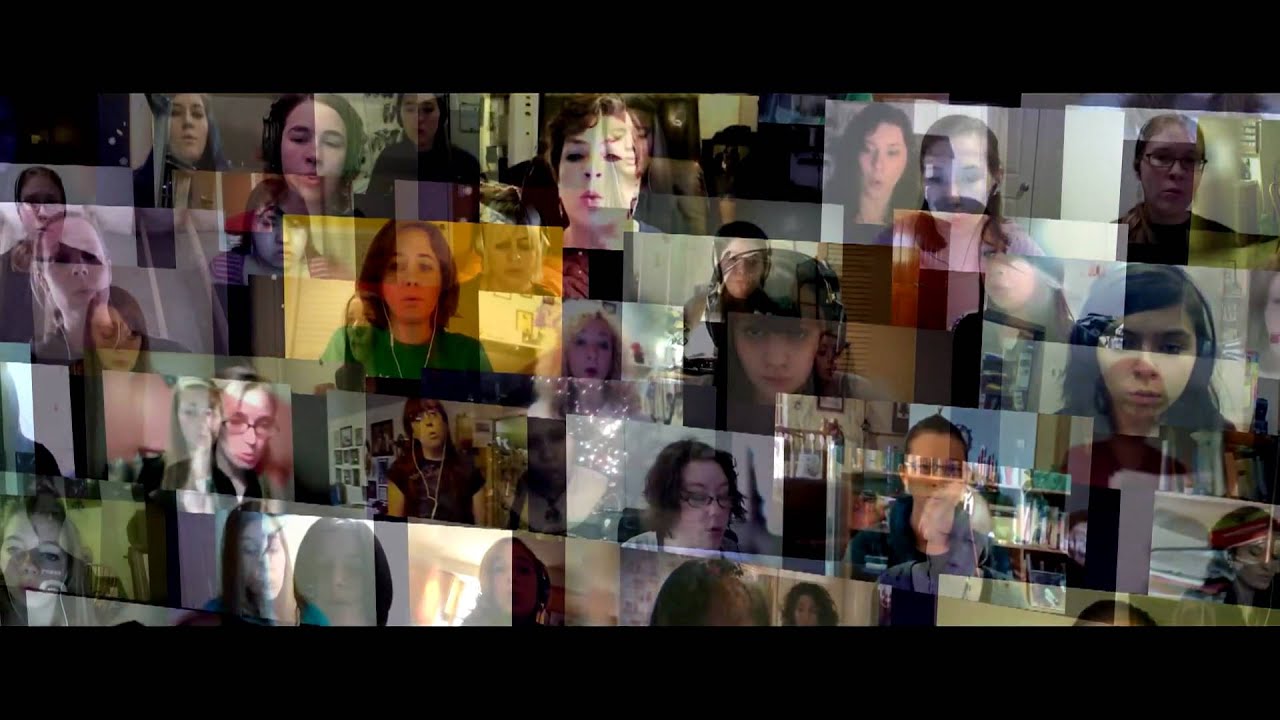
With an emergent technology, something happens that you’d never imagined. Here, YouTube and Hulu, via WordPress, Facebook, and Twitter — and built upon the Internet — bring something new and wonderful to life.
In a moving, madly viral video last year, composer Eric Whitacre led a virtual choir of singers from around the world. He talks through the creative challenges of making music powered by YouTube, and unveils the first 2 minutes of his new work, “Sleep.”
- “Thought of You” video from YouTube
From Open Culture
Ryan Woodward has worked on the art direction of many big name Hollywood films – Ironman 2, Spiderman 2 & 3, The Iron Giant, the list goes on. But he had an idea for a short animated film, a love story expressed through dance, and it led to a fruitful collaboration with dance choreographer Kori Wakamatsu.
- Behind the Scenes from YouTube
- Excerpt from Open Culture
- Lyrics from The Weepies, “World Spins Madly On”
In Rachel Botsman’s new book, What’s Mine is Yours: The Rise of Collaborative Consumption, the general theme is that we’re shifting away from a society of hyper-consumption and equating personal self-worth with amount of material good accumulated, and instead to a world where our ability to access and exchange resources, develop a reputation, and build community and social capital takes precedence in how we choose to express who we are and what we choose to define us.
The authors give hundreds of examples of how people are finding new ways to share and exchange value – what they call ‘collaborative consumption’ – using social lending platforms (LendingClub, Prosper), open barter networks (ITEX, Bartercard), peer-to-peer coworking and currencies (Hub Culture), reuse networks (Freecycle), car sharing (ZipCar, GoGet), bike sharing, swap trading (SwapTree), and peer to peer rentals for plots of land (Landshare, a room for the night (Airbnb), or any other item you could imagine (Zilok)….
The idea is that it’s not just about creating more things anymore, but about thinking from a systems perspective and understanding how to find the balance in the relationship between business, sustainability, and consumption. Our planet can’t handle an endless supply of product creation, so the shift is underway for us to begin to design for participation, collaboration, and enabling new experiences….
- The Internet enables a new infrastructure for participation, reducing the transaction costs of matching the wants and needs of people and giving them the opportunity to coordinate. We’re finding this enables us to allocate resources and solve distribution problems more rapidly and effectively.
- By taking out the middlemen, people can begin to build trust with one other again. In the online space, this becomes transparent as reputation systems become more robust, revealing our interests, our social connections, and the trail of behaviors and actions across the Web.
- The “Tragedy of the Commons” is not a given. People are capable of sharing resources if given the tools to self-organize, coordinate, and monitor each other.
- New marketplaces are being built for people to build community, shape their personal identities, earn recognition, and participate in meaningful activity. They are finding new outlets for autonomy, control, freedom, and self-expression….
- Aided by new communication infrastructures, we are learning to find the balance between the pursuit of one’s own self-interest and the greater good.
- Excerpts from Emergent by Design
Imagine your workplace as an award-winning garden — a place where you nurture knowledge and success. A place where people grow and learn from one another by sharing best practices. A place where training content expands and improves through crowdsourcing. A place that’s self-sustaining, dynamic, and always fresh.
That place is called collaborative learning.
So how do you create this magical place? You just launch a collaborative learning tool and people will flock to it, right? Not necessarily. People resist change. In the world of traditional hierarchy, people hoard knowledge and shun openness. The world is going open source, but that doesn’t mean every organization’s culture is open-sourced.
New ideas and systems need nurturing. Growing a healthy learning community is a lot like growing a healthy garden. Here’s how to start your own.
- Excerpts from Learning Solutions Magazine