
Media
I stumbled on this 2006 drama/comedy from South Korea on Hulu, and was surprised to be drawn in deeply over the arc. At times a comedy, a medical drama, a romance, a kickboxing fight scene, I never quite knew what would come next. The conventional genres in domestic U.S. television — based on demographically-segmented marketing — simply don’t align with the program production system run by MBC, and licensed to Hulu by Drama Fever.
The contrasts are what stood out for me — sometimes obvious and over the top, other times subtle and meaningful. The single mother, taking care of both daughter and senile father, growing tangerines on an island right off the Seoul metropolis. The dissonance between modern (read western, global) influences, and that way things are done in a small rural village, including all of the preconceived notions of everyone’s place in the scheme of things.
Sometimes the production is over the top … for me, but perhaps not for the intended audience. The music score repeats themes, although these are over 60 minutes of filmmaking per episode rather than our 42 minutes. Several characters are meant, I believe, to represent caricatures of familiar archetypes in South Korea (and I look forward to learning more about these cultural assumptions).
In the end, though, there is the never-ending battle between the kind, generous, and self-sacrificing people others depend upon … and the arrogant, selfish and, perhaps, fearful and weak ones. The stereotype appears to reinforce the gender inequity here, but the direction of growing and life and love clearly aligns with the generous characters, growing and making difficult decisions which require compassion as well as intelligence.

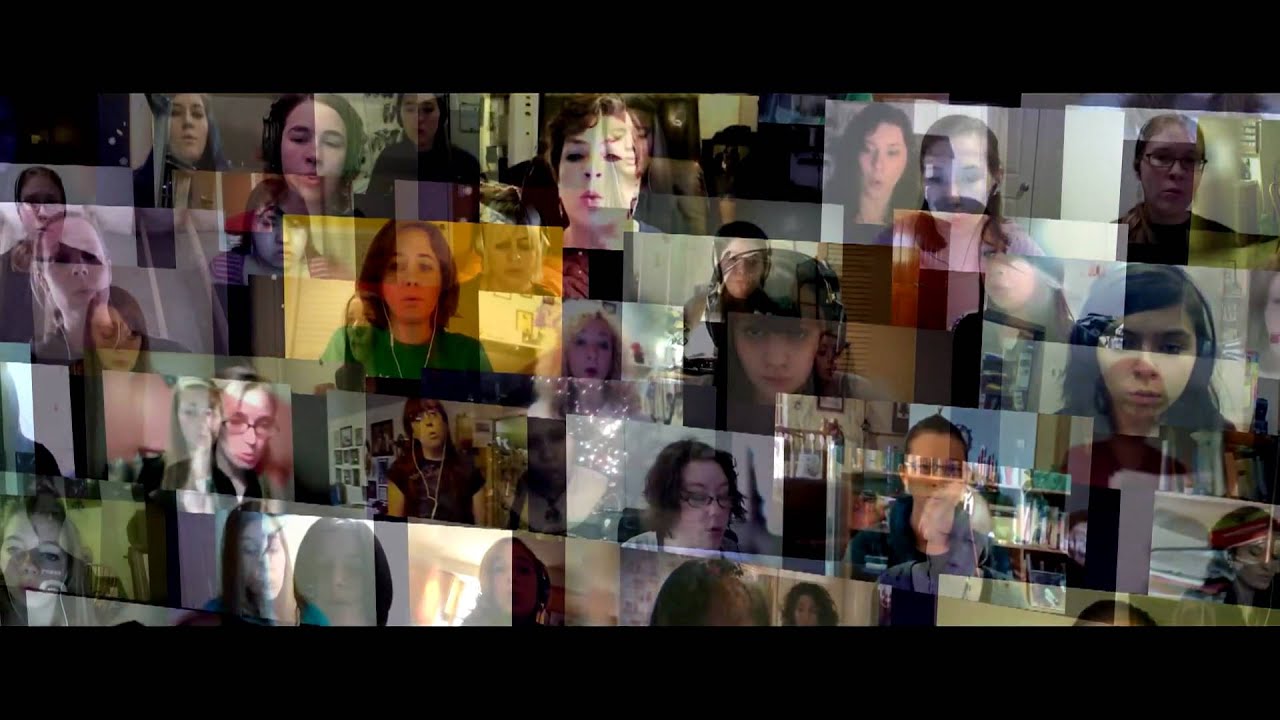
With an emergent technology, something happens that you’d never imagined. Here, YouTube and Hulu, via WordPress, Facebook, and Twitter — and built upon the Internet — bring something new and wonderful to life.
In a moving, madly viral video last year, composer Eric Whitacre led a virtual choir of singers from around the world. He talks through the creative challenges of making music powered by YouTube, and unveils the first 2 minutes of his new work, “Sleep.”
By Niraj Chag
There was a season when my steps were unwavering
Within me was this ocean
That would repair and cure me of all my pains
But at the passing of time
I am no longer certain of my hearts integrity
The days of my youth
Now only an abstract memory
Is my essence just a delusion?
How long do I submit to such a night
Where dreams are shattered
And mine forsake me
My silent cries reveal stains of my memory
Everything is fragmented its falling apart
Yet perfectly connected, attached, aligned in my heart
A collage of hopes I had commissioned from within
Were denied me and blotted out
They cannot understand my lifes journey
So I alone must complete it
These are the games we played at school
Our hands raised in despair
With no exception to the rule
These times are not changing…
This boy had learned to fail
In times like these to cry seems so absurd
His own life’s crisis pales
In the shadow of this truly dying world…
Show me the love to keep us together
Open up your hearts don’t turn me away
Comfort me through this stormy weather
From where I stand, I see a broken land…
Just as the cassette tape replaced the 8-track, only to be replaced in turn by the compact disc, itself being undercut by MP3 players, … online free newspaper sites such as The Huffington Post and the National Review Online are leading to creative destruction of the traditional paper newspaper….
In fact, successful innovation is normally a source of temporary market power, eroding the profits and position of old firms, yet ultimately succumbing to the pressure of new inventions commercialised by competing entrants….
In philosophical terms, the concept of ‘creative destruction’ is close to Hegel‘s concept of sublation. It was introduced into German economic discourse by Werner Sombart in 1913 … It has been argued that Sombart’s formulation of the concept was influenced by Eastern mysticism, specifically the image of the Hindu god Shiva….
In Hinduism, the god Shiva is simultaneously destroyer and creator, portrayed as Shiva Nataraja (Lord of the Dance), which is proposed as the source of the Western notion of ‘creative destruction.’
- Excerpts from Wikipedia