
From Curiosity to Career: Competencies for College, Career, and Community
A draft white paper developed with insights from Leadership Maine, Educate Maine, Project Login, the University of New England Academy of Digital Sciences, and the Jobs for Maine’s Graduates Extended Learning Opportunities initiative. It has not been peer-reviewed. Credits and resources are included at the end. (Developed in 2012 with updates through 2023.)
•
Academic credentials — such as diplomas, certifications, and certificates — have served as proxies for bundles of knowledge, practices, skills, and competencies for most of the past century and longer.
Now, due to the rapid evolution of independent learning facilitated by the Internet, learners are beginning to demonstrate the outcomes, competencies, and practices they have achieved in a variety of formal and informal settings and share them with current and future colleagues and employers, throughout a lifetime of learning.
Understanding these components of learning can help people prepare for thriving at home, at school, at work, and in civic life.
[ez-toc]
Competencies in Maine education
In K-12 education, Maine’s Learning Results — created in 1996 and updated in 2007 and 2011-13 — unbundled content area knowledge into competencies to be mastered along the pathways through lessons, units, courses, and high school diplomas.
In addition to eight content areas, there was recognition of the value of foundational skills — variously called life/work skills, 21st-century skills, transferrable skills, and habits of mind — that help learners thrive throughout their personal and professional lives. (These are more than the “soft skills” of interpersonal communication, and include critical thinking and creative problem-solving.)
Indeed, Maine was ahead of its time in that area as well. The Maine Learning Results included a set of cross-disciplinary competencies, called the Guiding Principles:
Each Maine student shall leave school as:
- A clear and effective communicator
- A self-directed and lifelong learner
- A creative and practical problem solver
- A responsible and involved citizen
- An integrative and informed thinker
In many Maine high schools, students demonstrate mastery of these guiding principles — or cross-disciplinary competencies — in order to earn a diploma.
Why are foundational competencies important?
In a survey of employers by the American Association of Colleges and Universities in 2013, 59% strongly agreed that “candidates’ demonstrated the capacity to think critically, communicate clearly, and solve complex problems is more important than their undergraduate major.”
The majority of employers continue to say that possessing both field-specific knowledge and a broad range of knowledge and skills is important for recent college graduates to achieve long-term career success. Very few indicate that acquiring knowledge and skills mainly for a specific field or position is the best path for longterm success…
Employers say that when hiring, they place the greatest value on demonstrated proficiency in skills and knowledge that cut across all majors. The learning outcomes they rate as most important include written and oral communication skills, teamwork skills, ethical decision-making, critical thinking, and the ability to apply knowledge in real-world settings. Indeed, most employers say that these cross-cutting skills are more important to an individual’s success at their company than his or her undergraduate major.
Business and organizational partners concur: when hiring college interns and entry-level employees, they choose students with stronger foundational skills and more real-world experience. This is a point of distinction for graduates who are so prepared.
In Maine Workforce Outlook 2012-2022, released in January 2015, the Maine Department of Labor reported that:
The nature of work increasingly demands higher levels of literacy and more sophisticated technology competencies.
The primary performance attributes of jobs in growing occupations are concentrated around critical thinking, problem-solving, reading comprehension, effective communication, and decision making.
Those contrast with the primary work activities or knowledge requirements of occupations that are expected to have the highest rates of job loss, which include handling and moving objects, controlling machines, repairing and maintaining equipment, and clerical functions.
In 2020, the Georgetown University Center on Education and the Workforce released a survey report entitled “The Competencies Employers Want.”
Workers need more than just their educational credentials to qualify for jobs that pay well, keep those jobs, secure promotions, and boost their earnings on the job. The survey reveals the five most in-demand competencies across the labor market.
They were:
- Communication
- Teamwork
- Sales and customer service
- Leadership
- Problem solving and complex thinking
Which version of the foundational competencies are we talking about?
Based on the above trends, we can envision a future where lifelong learners work together on college, career, and civic activities — at work, at home, and within their community — that benefit from, and improve, their mastery of foundational competencies.
However, there are many different models used around the country to describe these competencies:
- 21st-Century Skills – P21 Partnership
- American College Testing (ACT) – National Career Readiness Certificate WORKREADY (WorkKeys/Talents)
- Career-Ready Practices – Career Technical Education
- Employability Standards – Skills USA Workforce Ready System
- Essential Learning Outcomes – American Association of Colleges and Universities (LEAP) | VALUE Rubrics
- Habits of Mind – Art Costa and Bena Kallick/ACSD
- MHA – MHA Labs
- Mindsets and Behaviors – American School Counselor Association
- Occupational Handbook Soft Skills – U.S. Department of Labor
- Personal, Academic, and Workforce Competanties – US Dept of Labor –careeronestop.org/CompetencyModel
- PIAAC Adult Competencies – OECD (Organisation for Economic Co-operation and Development)
- Positive Youth Development – Many organizations, including 4H and the Search Institute
- Skills USA – Career Readiness Curriculum
- Workready System – workreadyforme.org
Foundational Competencies from the U.S. DOL

We decided to use the U.S. DOL Competency Building Blocks Model (overview) because it is aligned with occupational data at the state and national levels.
This model shows how foundational competencies — personal effectiveness, basic academic, and workplace competencies — underpin industry-related and occupation-related competencies.
The model is a tiered “building block” framework. Each layer includes blocks representing competencies — a cluster of related skills, knowledge, and abilities that affect a major part of one’s job — that are essential for successful performance in an industry or occupation represented by the model.
Users can revise, remove, or add new building blocks to create their own customized competency models that reflect the skills, knowledge, and abilities needed in their industry or occupation.
At the base of all occupations are the Foundational Competencies which include Personal Effectiveness Competencies, Basic Academic Competencies, and Workplace Competencies.
Personal Effectiveness Competencies
- Interpersonal Skills and Teamwork: Displaying skills to work with others from diverse backgrounds.
- Integrity: Displaying accepted social and work behaviors.
- Professionalism: Maintaining a professional demeanor at work.
- Initiative: Demonstrating a willingness to work.
- Adaptability and Flexibility: Displaying the capability to adapt to new, different, or changing requirements.
- Dependability and Reliability: Displaying responsible behaviors.
- Lifelong Learning: Displaying a willingness to learn and apply new knowledge and skills.
Basic Academic Competencies
- Reading: Understanding written sentences and paragraphs in work-related documents.
- Writing: Using standard English to compile information and prepare written reports.
- Mathematics: Using mathematics to express ideas and solve problems.
- Science: Using scientific rules and methods to solve problems.
- Communication: Giving full attention to what others are saying, and communicating in English well enough to be understood by others.
- Critical and Analytical Thinking: Using logic, reasoning, and analysis to address problems.
- Fundamental IT User Skills: Using a computer, communication devices, and related applications to input, retrieve, and communicate information.
Workplace Competencies
- Teamwork: Working cooperatively with others to complete work assignments.
- Planning and Organizing: Planning and prioritizing work to manage time effectively and accomplish assigned tasks.
- Innovative Thinking: Generating innovative and creative solutions.
- Problem Solving and Decision Making: Applying critical-thinking skills to solve problems by generating, evaluating, and implementing solutions.
- Working with Tools and Technology: Selecting, using, and maintaining tools and technology to facilitate work activity.
- Business Fundamentals: Knowledge of basic business principles, trends, and economics.
•
Pathways from curiosity to career start with interests
Once foundational competencies are identified, defined, learned, and demonstrated, what are the next steps on pathways toward careers? How can learners discover which occupational groups might be a good match for them?
The Holland Themes approach to matching careers with personality types has been integrated into the US Department of Labor free online database, The Occupational Information Network (O*NET) for over 20 years.
According to the Committee on Scientific Awards, Holland’s “research shows that personalities seek out and flourish in career environments they fit and that jobs and career environments are classifiable by the personalities that flourish in them.” Holland wrote “the choice of a vocation is an expression of personality.”
Here are the interest groups as adapted by Maine Sparks, a project of Leadership Maine from the O*Net Interest Profiler.
Artistic (“Creators”)
Work involves creating original visual artwork, performances, written works, food, or music for a variety of media, or applying artistic principles to the design of various objects and materials.
These occupations are often associated with visual arts, applied arts and design, performing arts, music, creative writing, media, or culinary art, with preferences for:
- Creativity in what you do
- Work that can be done without following a set of rules
Conventional (“Organizers”)
Work involves following procedures and regulations to organize information or data, typically in a business setting.
These occupations are often associated with office work, accounting, mathematics/
- Following a strong leader
- Working with clear rules
Enterprising (“Persuaders“)
Work involves managing, negotiating, marketing, or selling, typically in a business setting, or leading or advising people in political and legal situations.
These occupations are often associated with business initiatives, sales, marketing/
- Making decisions
- Persuading and leading people
Investigative (“Thinkers”)
Work involves studying and researching non-living objects, living organisms, disease or other forms of impairment, or human behavior.
These occupations are often associated with physical, life, medical, or social sciences, and can be found in the fields of humanities, mathematics/
- Figuring out problems
- Searching for facts
Realistic (“Doers“)
Work involves designing, building, or repairing of equipment, materials, or structures, engaging in physical activity, or working outdoors.
These occupations are often associated with engineering, mechanics and electronics, construction, woodworking, transportation, machine operation, agriculture, animal services, physical or manual labor, athletics, or protective services, with preferences for:
- Real-world materials like wood, tools, and machinery
- Working with plants and animals
Social (“Helpers“)
Work involves helping, teaching, advising, assisting, or providing service to others.
These occupations are often associated with social, health care, personal service, teaching/
- Helping and being of service to people
- Teaching and coaching
•
The Maine Sparks Project created a simple 12-question form to help learners find their strongest interests and explore possible occupations.

Project Login used the Holland themes and competency model to encourage young people and their mentors and teachers to explore pathways toward digital and computing careers.


The UNE Academy of Digital Sciences aligned course pathways to Holland Themes, including foundational competencies
 Development and Programming Fundamentals (062)
Do you like to solve problems by building things? Do you have a high attention to detail and logic? Do you have an aptitude for the technical side of computers and technology?
Work style preferences (Holland code): R – Realistic/Doer. Foundation for all paid internships. Focused career areas: Software Development 15-1132.00, Computer Programming 15-1131.00, Web Development 15-1134.00, Quality Assurance Testing 15-1132.00, Client Support 15-1151.00.
 Interaction and Interface Fundamentals (064)
Are you a visual problem solver? Do you enjoy changing how something looks or works so that it’s easier to use? Does making a basic version of something and having people test it sound interesting to you?
Work style preferences (Holland code): A – Artistic/Creator. Foundation for all paid internships. Focused career areas: Interface Design 27-1024.00, Web Development 15-1134.00, Video Game Design 15-1199.11, Client Support 15-1151.00.
 Analysis and Data Fundamentals (066)
Are you data-driven? Are you able to organize and communicate information to others? Do you review large amounts of information before making an important decision? Are you comfortable with spreadsheets and reports?
Work style preferences (Holland code): I – Investigative. Foundation for all careers. Focused career areas: Systems Analysis 15-1121.00, Business Intelligence Analysis 43-9111.00, Information Security Analysis 15-1122.00, Client Support 15-1151.00.
Add work values
Another way to identify strong correlations between students and occupations is through the US DOL’s Work Values Indicator.
The Work Values Indicator is a self-assessment career exploration tool that allows clients to pinpoint what is important to them in a job. It helps people identify occupations that they may find satisfying based on the similarity between their work values (such as achievement, independence, and conditions of work) and the characteristics of the occupations.
Questions (20) | Browse by work values | Summaries
Achievement
If Achievement is your highest work value, look for jobs that let you use your best
abilities. Look for work where you can see the results of your efforts. Explore jobs where
you can get the feeling of accomplishment.
Independence
If Independence is your highest work value, look for jobs where they let you do things
on your own initiative. Explore work where you can make decisions on your own.
Recognition
If Recognition is your highest work value, explore jobs with good possibilities for
advancement. Look for work with prestige or with the potential for leadership.
Relationships
If Relationships is your highest work value, look for jobs where your co-workers are
friendly. Look for work that lets you be of service to others. Explore jobs that do not make
you do anything that goes against your sense of right and wrong.
Support
If Support is your highest work value, look for jobs where the company stands behind
its workers and where the workers are comfortable with management’s style of
supervision. Explore work in companies with a reputation for competent, considerate,
and fair management.
Working Conditions
If Working Conditions is your highest work value, consider pay, job security, and good
working conditions when looking at jobs. Look for work that suits your work style. Some
people like to be busy all the time, or work alone, or have many different things to do.
Explore jobs where you can take best advantage of your particular work style.
By using these two brief surveys, a learner can narrow down 800+ occupations to a set of top matches to start exploring.
Add education-equivalency levels
Another factor that can be integrated into a matching algorithm is estimated education-equivalency level — called Job Zones by the DOL — for each occupation. These also define pathways through a career based on increasing competency levels.
Job Zone One — Little or No Preparation Needed
Some of these occupations may require a high school diploma or GED certificate.
These occupations involve following instructions and helping others. Examples include food preparation workers, dishwashers, floor sanders and finishers, landscaping and groundskeeping workers, logging equipment operators, and baristas.
Job Zone Two — Some Preparation Needed
These occupations usually require a high school diploma.
These occupations often involve using your knowledge and skills to help others. Examples include orderlies, counter and rental clerks, customer service representatives, security guards, upholsterers, tellers, and dental laboratory technicians.
Job Zone Three — Medium Preparation Needed
Most occupations in this zone require training in vocational schools, related on-the-job experience, or an associate’s degree.
These occupations usually involve using communication and organizational skills to coordinate, supervise, manage, or train others to accomplish goals. Examples include hydroelectric production managers, desktop publishers, electricians, agricultural technicians, barbers, court reporters and simultaneous captioners, and medical assistants.
Job Zone Four — Considerable Preparation Needed
Most of these occupations require a four-year bachelor’s degree, but some do not.
Many of these occupations involve coordinating, supervising, managing, or training others. Examples include real estate brokers, sales managers, database administrators, graphic designers, conservation scientists, art directors, and cost estimators.
Job Zone Five — Extensive Preparation Needed
Most of these occupations require graduate school. For example, they may require a master’s degree, and some require a Ph.D., M.D., or J.D. (law degree).
These occupations often involve coordinating, training, supervising, or managing the activities of others to accomplish goals. Very advanced communication and organizational skills are required. Examples include pharmacists, lawyers, astronomers, biologists, clergy, physician assistants, and veterinarians.
Add occupational projections for Maine
The Maine Department of Labor Center for Workforce Research and Information conducts surveys with economists and employers to create regular projections for employment by occupation 5-10 years ahead.
The Employment Outlook to 2030 includes projections for all Job Zones by SOC code. These can be sorted by the number of openings, net job growth, and fastest job growth.
Top Job Zone 1 occupations by number of openings in 2030

Top Job Zone 2-3 occupations by number of openings in 2030

Top Job Zone 4-5 occupations by number of openings in 2030

Building the algorithm
Putting all of these factors together — personal interests and work values and occupations prioritized by projections for greatest occupation opportunities — can turn a small number of questions into a list of occupation groups to explore: through the most relevant competencies, foundational and by occupation and industry.
Simplifying the presentation
A key element of this matching algorithm is presenting the questions and matching suggestions as simply as possible, especially including video samples. Here are several options.
Sample 1: Roadtrip Nation (national)
Roadtrip Nation asks for interests with a simple selection screen. A Holland-theme oriented screen would narrow these to four options.

They also present career options in an engaging format.

Then, after combining interests and occupational interests, they present a screen with profiles for specific occupations, such as this one for Information Security:

Here’s a sample video profile for that occupation.

Another possible model is:
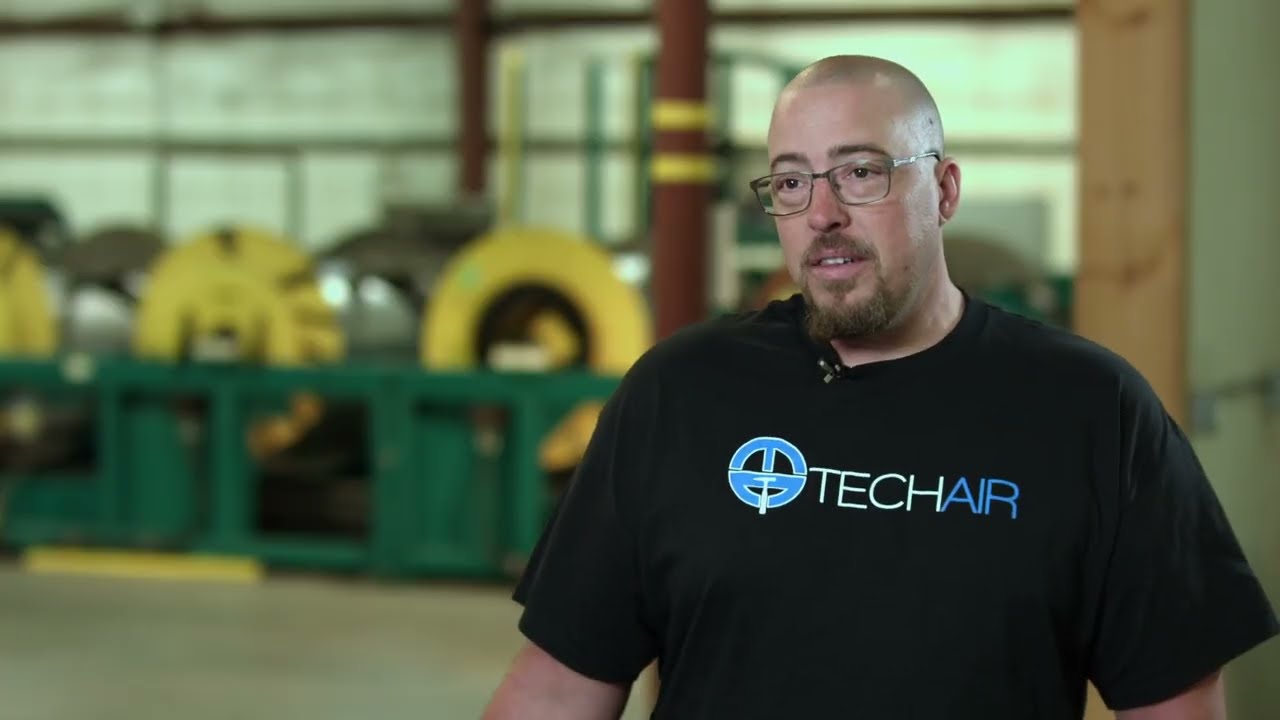
Sample 2: Destination Occupation (Maine)
An example video: TechAir
Industry-wide and occupation-group competencies
After presenting a focused list of occupations that may match a learner’s interests, the next step is to align learning opportunities for that occupation.
First, the foundational competencies we discussed earlier can be mastered, demonstrated, and then communicated through microcredentials.
Industry-wide competencies
Next are basic competencies for the industry or occupation group. The general building blocks model provides professional association-aligned competencies for dozens of industries in these categories:
- Accommodation and Food Services
- Construction
- Energy and Utilities
- Entrepreneurship
- Finance and Insurance
- Health Care and Social Assistance
- Information
- Manufacturing
- Physical and Enterprise Security
- Professional, Scientific, and Technical Services
- Retail Trade
- Transportation and Warehousing
Here’s the competency model for a sector within Accomodation and Food Services: Hospitality, Tourism, and Events.

Educators can benefit from competency documents aligned with each model. These include all competency levels for the sector, including academic competencies.
- Credential Competencies Worksheet (sample PDF)
- Curriculum Analysis Worksheet
- Employer Analysis Worksheet
- Gap Analysis Worksheet
Occupational-group competencies
In addition, in many occupations, people are employed across industries, so the competencies model can also be applied to the national DOL’s Major Occupational Groups (detailed taxonomy) using O*Net occupations.
- Architecture and engineering
- Arts, design, entertainment, sports, and media
- Building and grounds cleaning and maintenance
- Business and financial operations
- Community and social service
- Computer and mathematical
- Construction and extraction
- Educational instruction and library
- Farming, fishing, and forestry
- Food preparation and serving related
- Healthcare practitioners and technical
- Healthcare support
- Installation, maintenance, and repair
- Legal
- Life, physical, and social science
- Management
- Office and administrative support
- Personal care and service
- Production
- Protective service
- Sales and related
- Transportation and material moving
By way of example, Project>Login, a program of Educate Maine, used the building blocks model for computing and digital practices (detailed outline and rubrics).
Developing competencies through engaged learning
Since these competencies and real-world experiences are considered important by so many of our constituents, how can we best work together to support student’s continuous development of those competencies? What are the best ways to help students master these competencies? What learning environments are most conducive to 21st-century learning?
Secondary-level learning
The basics can be initiated in elementary and secondary education. The Gallup Student Survey researched the environments and experiences that are most conducive to learning in grades 5-12. Two million students have taken the survey since 2009, leading to recommendations for the most relevant experiences and engagement that are significant indicators of future well-being
“Research has shown that hope, engagement, and well-being are actionable targets and indicators of success, with links to grades, achievement scores, retention, and future employment.
- Hope: The ideas and energy we have for the future. Hope drives high school students’ attendance, credits earned, and GPA
- Engagement: The involvement in and enthusiasm for school. Engagement distinguishes between high-performing and low-performing schools
- Well-Being: How we think about and experience our lives. Well-being results tell us how students are doing today and predict their future success.”
The results, available by district and by school, include recommendations for parents, educators, business people and neighbors.
College-level learning
A 2014 Gallup-Purdue survey of nearly 30,000 Americans with a bachelor’s degree or higher found that the odds of thriving in all areas of well-being of life after college were 4.6 times higher if the respondent was “engaged at work.” The factors that increased the odds of being engaged at work included the following experiences:
- “College prepared me well for life outside of college” (2.6 times higher)
- “College was passionate about the long-term success of its students” (2.4 times higher)
- “I had a mentor who encouraged me to pursue my goals and dreams” (2.2 times higher)
- “I had at least one professor who made me excited about learning” (2.0 times higher)
- “I had an internship or job that allowed me to apply what I was learning in the classroom” (2.0 times higher)
Crosswalks between college majors and occupations
As learning experiences are being developer for future or current college students, it is worth noting that the correlations between specific majors and specific occupations are strong only in some professional fields. However, the broad, foundational competencies are relevant across occupations as graduates move through multiple professions throughout their lifetimes.

Given the complex correlations beween college majors and occupations, acrosswalk is available for college administrators between the Standard Occupational Classification (SOC codes) system from the US DOL and the Classification of Instructional Programs (CIP codes) (132-page PDF) system from the US DOE
•
Appendices
A Skills Gap From College to Career Doesn’t Exist. It’s the Awareness Gap We Need to Fix
A popular narrative in the employment market today is that a “skills gap” exists between the abilities employers seek in candidates and the capabilities that new college graduates gain through postsecondary education. Beyond skills readily demonstrable from college curriculum (primarily cognitive skills and technical skills), employers complain about the lack of soft skills among college graduates: leadership, the ability to work in a team, written communication skills or problem-solving.
But what if I told you that the skills gap was little more than fiction, and a different gap exists. I call it the “awareness gap.” While college graduates may leave universities with transcripts and resumes, employers aren’t able to see many of the skills they’ve developed through coursework and co-curricular activities.
Simply put, the awareness gap is the inability for college graduates to make employers aware of the skills they do have…
Maine Occupational Outlook
Notes on the Nature of Work
Work attributes valued in growing and declining occupations differ.
Growing Occupations: Critical thinking, problem-solving, decision making, mathematics, reading comprehension, deductive reasoning, processing information, analyzing data
Declining Occupations: Machinery operation, equipment inspection, tool selection, physical strength, following instructions, manual dexterity, clerical functions
The nature of work increasingly demands higher levels of literacy and more sophisticated technology competencies. The primary performance attributes of jobs in growing occupations are concentrated around critical thinking, problem-solving, reading comprehension, effective communication, and decision making. Those contrast with the primary work activities or knowledge requirements of occupations that are expected to have the highest rates of job loss, which include handling and moving objects, controlling machines, repairing and maintaining equipment, and clerical functions.
A note about STEM Jobs
Report after report over the last two decades from educational, trade, and other interest groups exhorted the need to educate more people for STEM* jobs. Many portray an impending shortage of workers in highly skilled, well-paying science, technology, engineering, and math-based occupations. Most treat STEM jobs as a homogeneous group with similar growth prospects.
The problem with these characterizations is that there is a great deal of diversity of functions and an equally wide range in growth prospects not only between science and technology, for example, but also the range of occupations within sciences, within technology, within engineering, and within mathematics. The variety of STEM occupations creates very different growth prospects.
Under the Standard Occupational Classification system used by economic agencies to classify and count jobs, there are 653 occupations in which there is employment in Maine and for which we have developed projections. Of that number, 181 occupations are designated as STEM by either the O*Net consortium or the U.S. Bureau of Labor Statistics. Collectively, the number of jobs in those 181 occupations is expected to rise 6.5 percent from 2012 to 2022, which is nearly three times the rate for all occupations. The expected gain of 6,800 jobs in STEM occupations accounts for 46 percent of expected net job growth.
Individually, 107 of those STEM designated occupations are expected to grow faster than average, another 13 are expected to grow more slowly than average, and 61 are expected to be unchanged or lose jobs. Like other types of functions, slowly growing or declining STEM occupations generally are those being impacted by new or changing technologies that are improving or replacing processes.
*Science, Technology, Engineering, and Mathematics
American Association of Colleges and Universities Employers Survey
The majority of employers continue to say that possessing both field-specific knowledge and a broad range of knowledge and skills is important for recent college graduates to achieve long-term career success. Very few indicate that acquiring knowledge and skills mainly for a specific field or position is the best path for longterm success…
Employers say that when hiring, they place the greatest value on demonstrated proficiency in skills and knowledge that cut across all majors. The learning outcomes they rate as most important include written and oral communication skills, teamwork skills, ethical decision-making, critical thinking, and the ability to apply knowledge in real-world settings. Indeed, most employers say that these cross-cutting skills are more important to an individual’s success at their company than his or her undergraduate major.

Resources
Research and reports on engagement
- Gallup-Purdue Index | Research | Report
- NESSC Briefings – Proficiency-based diploma | Proficiency-based learning
Videos on learning, thriving, and digital studies
- Peter Benson on thriving
- Ken Robinson on changing paradigms in education
- John Seely Brown on entrepreneurial learning
- Proficiency-based learning in Maine: Student voice and choice | Demonstrating learning
- Steve Jobs on passion at work
- Caine’s Arcade on tinkering
Resources on Digital Badging (micro-credentials)
- About Open Badges
- Afterschool Snack: The Potential of Digital Badges
- Digital Badges for Learning-US Dept of Education
- The Teacher’s Guide to Badges in Education
About this paper

Creative Commons BY-SA license. By Jay Collier, The Compass LLC for Leadership Maine, Tau Class, Blue Team, 2012.
This is an evolving document. Please send us feedback on this approach and come back to see our progress. For more information, contact Jay Collier, jay.collier@thecompass.com
Versions – 2012. 2014: 6/28, 7/24, 8/5, 9/26, 11/10, 12/22; 2015: 1/6, 1/23, 1/25, 2/19, 2/25, 3/12, 4/20, 7/6, 7/10, 7/13, 10/24, 12/7; 2016: 3/25; 2017: 6/28. 2023: 12/11.